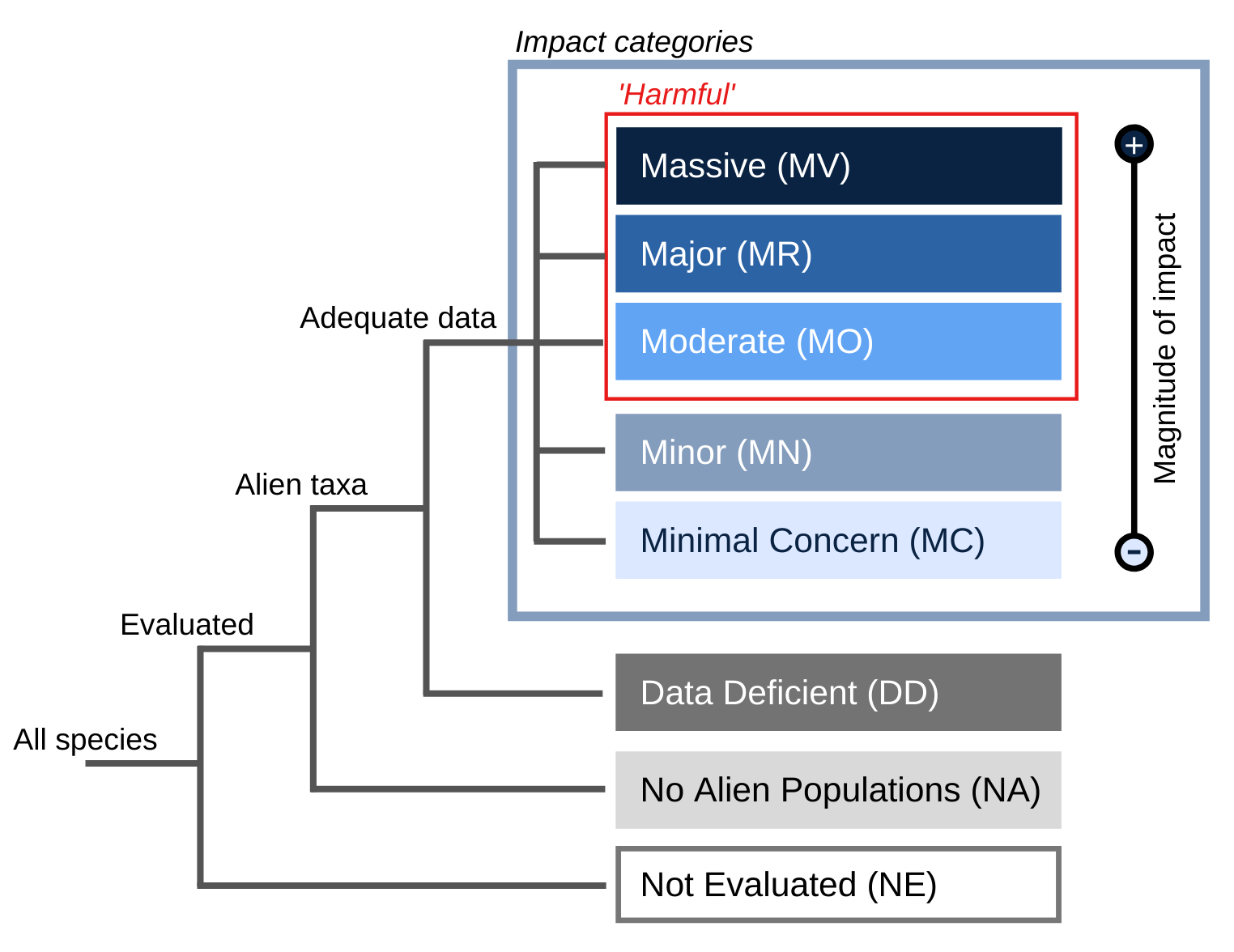
• Not Evaluated
    NE
  • No Alien Population
    NA
  • Data Deficient
    DD
  • Minimal Concern
    MC
  • Minor
    MN
  • Moderate
    MO
  • Major
    MR
  • Massive
    MV
  • General
  • Distribution
  • Impact
  • Management
  • Bibliography
  • Contact
Common name
Japanese Bubble Snail (English)
Synonym
Haminaea callidegenita
Haminea binotata
Similar species
Summary

Principal source:

Compiler:

Review:

Publication date:

Recommended citation: Global Invasive Species Database (2026) Species profile: Haminoea japonica. Downloaded from http://www.iucngisd.org/gisd/speciesname/Haminoea+japonica on 25-10-2026.

Countries (or multi-country features) with distribution records for Haminoea japonica
ALIEN RANGE
NATIVE RANGE
Informations on Haminoea japonica has been recorded for the following locations. Click on the name for additional informations.
Lorem Ipsum
Location Status Invasiveness Occurrence Source
Details of Haminoea japonica in information
Status
Invasiveness
Arrival date
Occurrence
Source
Introduction
Species notes for this location
Location note
Management notes for this location
Impact
Mechanism:
Outcome:
Ecosystem services:
Impact information
Red List assessed species 0:
Locations
Mechanism
[1] Competition
Management information
Bibliography
1 references found for Haminoea japonica

Management information
General information
Hanson D, Hirano Y, Valdes A (2012) Population genetics of Haminoea (Haloa) japonica Pilsbry, 1895, a widespread non-indigenous sea slug (Mollusca: Opisthobranchia) in North America and Europe. Biological Invasions 15: 395-406.
Contact
The following 0 contacts offer information an advice on Haminoea japonica
DD
Haminoea japonica
Japanese Bubble Snail
Date assessed
2023-09-26
Year published
Eicat category
DD (Data Deficient)
Justification for EICAT assessment


In Boundary Bay, British Columbia, the apparently ecologically analogous species Haminoea vesicula (Gould, 1855) was reported to have been extremely abundant in the past, with densities 200 individuals per m2 (Baldwin and Lovvorn 1994). However, a recent survey of the same area in 2011 revealed an abundant population of H. japonica and a complete absence of H. vesicula (personal observation D.H.). Although the relationship between H. vesicula and H. japonica in Boundary Bay is unclear, further studies may show that the apparent decline of H. vesicula could be attributed to the presence of H. japonica.
Confidence rating
Medium
Mechanism(s) of maximum impact
Competition
Countries of most severe impact
Canada
Description of impacts
H. japonica is of concern due to its increasing abundance, which can lead to competition with native species. The native species, H. vesicula, declined in the presence of H. japonica.
Assessor
Amy Henry
Contributors
Cascade Sorte
Reviewers
EICAT authority
Recommended citation
Amy Henry (2026). Haminoea japonica. IUCN Environmental Impact Classification for Alien Taxa (EICAT).